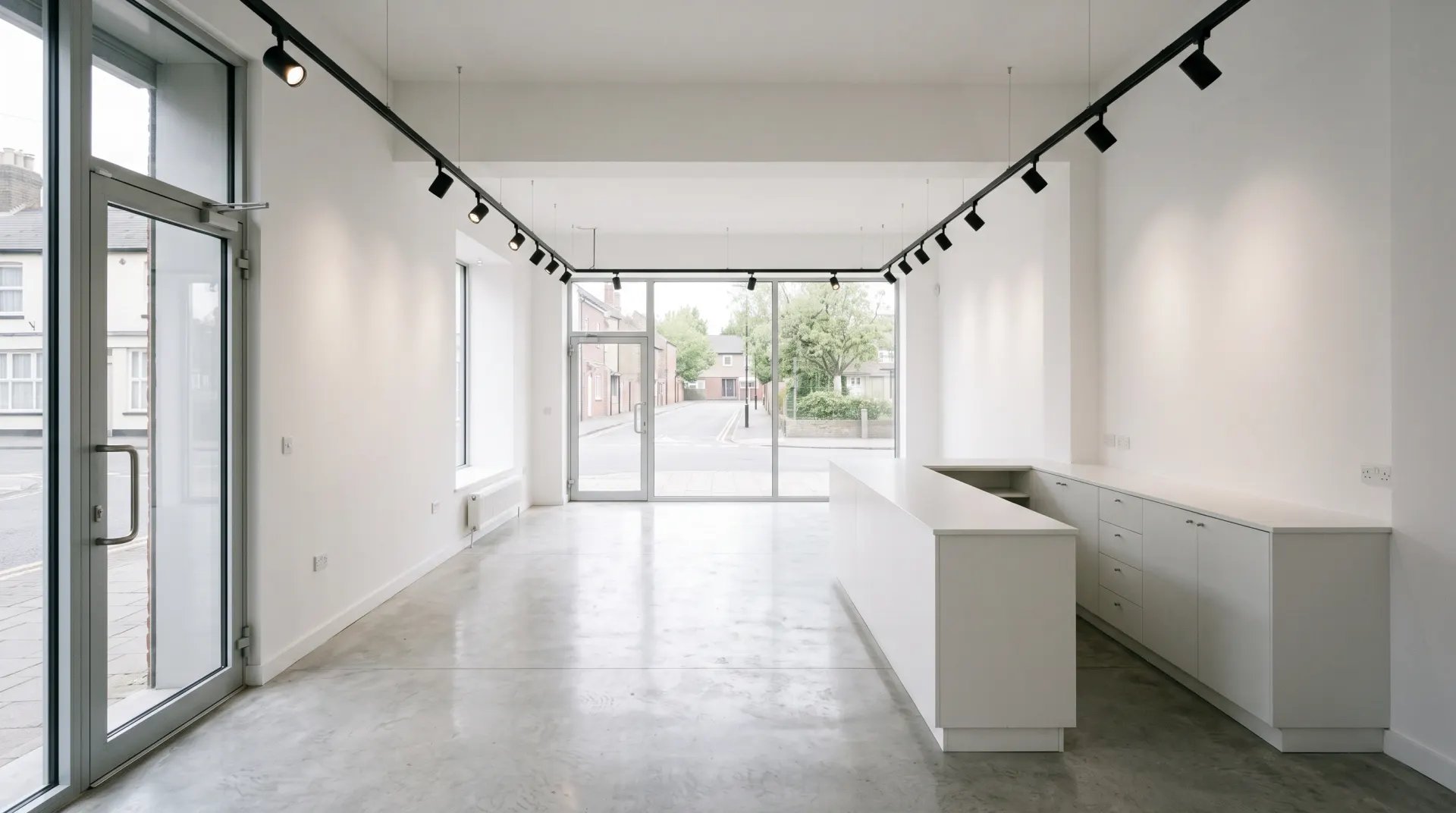
Every day shut costs money
With a shop the conversation starts with the schedule and only then moves to the tiles. What can carry on while you are open, and what has to happen in one closed block.
From empty unit to working business
A unit you have just taken over, or a business that after years needs a different layout. Either way it is the same list.
Layout
Walls out or in, a fitting room, a stockroom partitioned off, a counter built in.
Lighting and electrics
Circuits, track and spots where the products stand, and power where the till goes.
Water and sanitaryware
A pantry, a toilet for staff or customers, and the waste run to get there.
Finishing
Floor, tiling, plaster, ceiling and paintwork. The layer your customer sees.
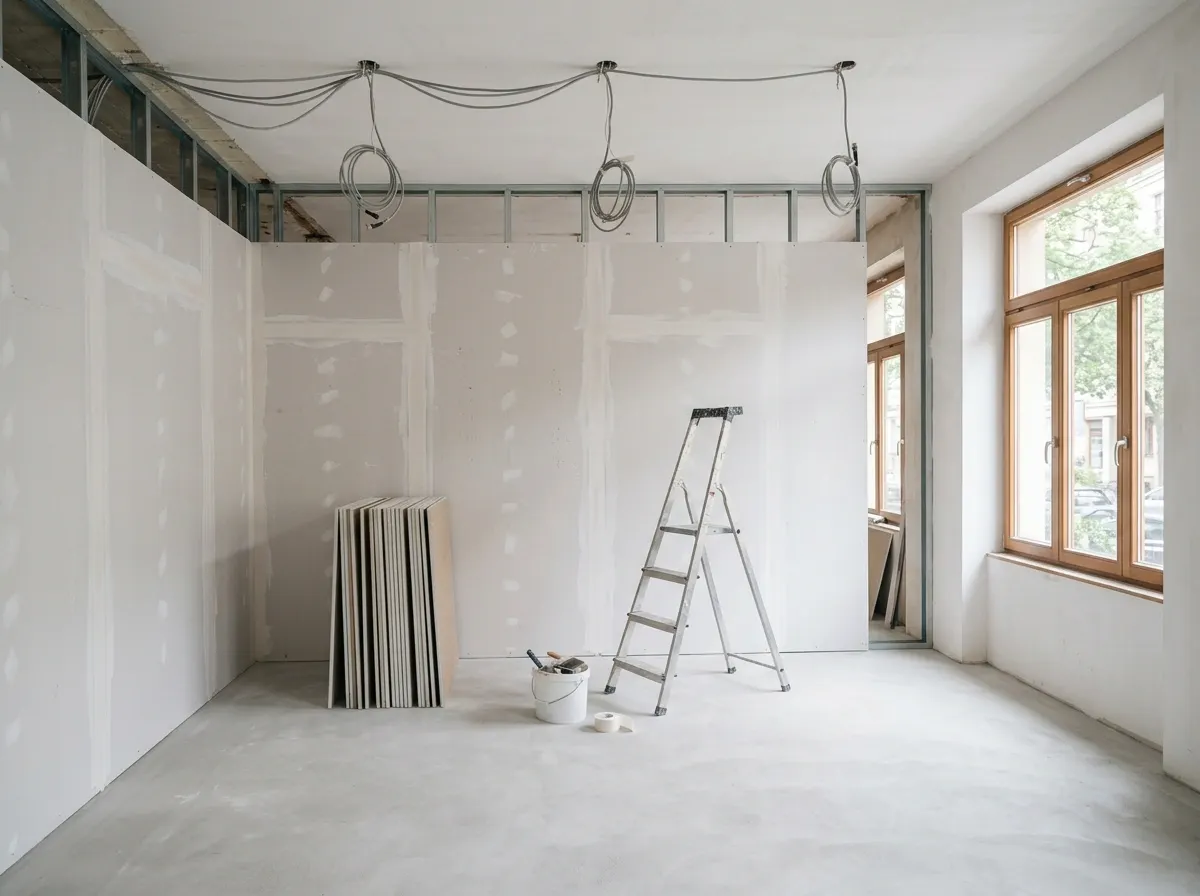
The schedule is the real work
A refurbishment in a business that keeps trading is mostly a puzzle of order. The dusty work, and the work that needs the power off, is not what you want spread over three weeks.
- We split the job into blocks and say which block keeps the door shut
- Whatever can be done without disruption, we plan around your opening hours
- Clearing up every day, so the space stays usable
- One point of contact, so you are not coordinating firms yourself
What we need from you up front
The sooner this is on the table, the more realistic the schedule and the price are.
Your opening hours
And the days when it really does not suit to have people working.
What the landlord allows
In a rented unit it is often set out what may happen to the structure and the shopfront.
A date
An opening, a handover or a season. We work the order of the job back from that.
The space itself
We come and survey it. Photos or a floor plan up front save an appointment.
When does it have to be ready?
Start there, and we work back what has to happen when.